Echizen Washi Village: What's There and How to Pair It with Takefu Knife Village
Short answer: Echizen Washi Village (越前和紙の里) is a small district in Echizen City, Fukui, where several papermaking facilities stand along one street: a paper museum, a restored Edo-period papermaking house where craftsmen demonstrate the work, and a hall where you can make a sheet of washi yourself. It is about 10 minutes by car from Echizen-Takefu Station on the Hokuriku Shinkansen, the same station you use for Takefu Knife Village. The Paper and Culture Museum, the Udatsu Paper & Craft Museum and Papyrus House close on Tuesdays.
A note on sources: we have not visited the Washi Village. This guide is based on the facilities’ official brochure (marked “as of April 2026”), picked up on November 1, 2026, and on the official website (echizenwashi.jp), checked the same day. What we add is the organizing: what each stop is for, who will enjoy it, and how to fit it into a day with the knife village.
The stops, in order along the street
The brochure lays the village out as a walking route called Washi no Sato-dori. From one end to the other:
| Stop | What it’s for | Time suggested by the brochure |
|---|---|---|
| Papyrus House (パピルス館) | Make your own sheet of washi; shop | Papermaking about 20 min |
| Udatsu Paper & Craft Museum (卯立の工芸館) | Watch craftsmen make paper in a historic house | Viewing about 20 min |
| Paper and Culture Museum (紙の文化博物館) | Exhibits on the history and culture of Echizen washi | Viewing about 20 min |
| Washi no Sato Art Museum (和紙の里美術館) | Gallery next on the route | Viewing about 20 min |
| Okamoto and Otaki shrines (岡太神社・大瀧神社) | The shrine of the paper goddess | — |
The brochure gives the gaps as about 100 m from Papyrus House to Udatsu, another 100 m to the Paper and Culture Museum, and about 1,000 m from the art museum to the shrines. Adding up the brochure’s own estimates, the four indoor stops come to roughly an hour and twenty minutes before you walk to the shrine.
Papyrus House: make a sheet yourself
This is the hands-on stop. With staff helping, you scoop pulp onto a wooden frame called a keta and spread it evenly, decorate it with pressed flowers or cut paper, add color with dyes and blot off the extra water, then let it dry for about ten minutes. The result is a one-of-a-kind sheet to take home. The brochure says it suits everyone from small children to adults.
- Entry: free (you pay for the item you make).
- Prices (brochure, as of April 2026): a single colored-paper sheet (shikishi) is 700 yen; larger sheets and fans cost more. Items such as a goshuin stamp book or a paper lamp need booking in advance. Prices were revised on April 1, 2026, so check the current list on the official site.
- Hours: 9:00–16:00, last papermaking reception 15:30.
- Booking: the official site asks visitors to contact the hall in advance because it can get crowded; groups of 15 or more must book.
Papyrus House also has a shop, Washi-dokoro Echizen, which the brochure describes as stocking a wide range of local washi and small paper goods.
Udatsu Paper & Craft Museum: the craft itself
A papermaking house from the mid-Edo period, moved here and restored. According to the brochure, traditional craftsmen use old-style tools to show the whole process: picking impurities out of the fiber, forming the sheets, and drying them. If you want to see how washi is really made rather than try a simplified version, this is the stop. Paper-making demonstrations run until 16:00.
Paper and Culture Museum: the background
The brochure lists about 360 examples of washi representing the region, plus cultural properties and documents that tell its history, and it also holds special exhibitions using washi. It shares a ticket with the Udatsu museum.
Udatsu + Paper and Culture Museum (shared ticket):
- Admission: 300 yen for adults (200 yen each for booked groups of 15+); half price with a disability certificate; free for high school students and younger. Check the official site in case a special exhibition changes this.
- Hours: 9:30–17:00, last entry 16:30.
- Closed: Tuesdays (the brochure says they open if Tuesday is a national holiday) and December 28–January 4. Papyrus House follows the same closing days.
Okamoto and Otaki shrines: the paper goddess
The brochure explains that Okamoto Shrine honors Kawakami Gozen, said to have taught papermaking to this village. The main halls of both shrines stand side by side at the inner shrine on top of Mt. Gongen, about a 30-minute walk from the lower shrine. The lower shrine in the village, which serves both shrines, is a national Important Cultural Property. The brochure’s map marks cherry blossoms there in April and azaleas in May.
Hanagatami Park, if you have time
About 1,500 m from Papyrus House in the other direction, Hanagatami Park is known as the setting of the Noh play Hanagatami. The brochure highlights cherry blossoms, azaleas, hydrangeas and autumn leaves, and a cherry tree linked to Emperor Keitai about 20 minutes’ walk from the park.
Who will enjoy it
- Families with children: Papyrus House is the clear draw, since even small children can make a sheet.
- Craft and architecture fans: Udatsu shows working craftsmen in a historic building, much as the knife village’s viewing workshop shows blacksmiths.
- Museum visitors: the Paper and Culture Museum gives the history.
- Shrine and nature lovers: the shrines and Hanagatami Park, especially in spring and autumn.
Combining it with Takefu Knife Village
Both places are about 10 minutes by car from Echizen-Takefu Station and about 10 minutes from the Takefu interchange on the Hokuriku Expressway. The Washi Village figures are from its own brochure. The knife village figures are from the brochure of the Echizen Chiyozuru-no-Yakata (Echizen Knife Hall of Fame), another facility in Echizen City, in its panel of related facilities. Neither brochure gives the drive between the two, so ask when you book a taxi.
Three things shape the plan:
- Avoid Tuesdays. The Paper and Culture Museum, the Udatsu museum and Papyrus House are closed on Tuesdays (they open if Tuesday is a national holiday), according to the brochure. The brochure does not give the art museum’s closing day, so check the official site.
- Go on a weekday. Fewer craftsmen work at the knife village on weekends, and the knife village’s own closing days vary, so check its calendar too. Monday, Wednesday, Thursday or Friday works best for both.
- Mind the afternoon cut-offs. Papermaking reception ends at 15:30 and demonstrations at 16:00. A simple order is the knife village in the morning, then the Washi Village after lunch, starting with Papyrus House.
Taxis don’t always wait at Echizen-Takefu Station, so arrange your rides in advance. The main guide explains the station layout and the booked-taxi stand: Takefu Knife Village: The Workshop, the Museum, and How to Get There.
Getting there
- From Echizen-Takefu Station (Shinkansen): about 10 minutes by taxi or rental car. The official site also lists a rental bicycle option of about 20 minutes.
- From Takefu Station (Hapi-Line Fukui): about 20 minutes by taxi, or about 30 minutes by Fukutetsu bus (Nan’etsu or Ikeda line) to the “Washi no Sato” stop.
- By car: about 10 minutes from the Takefu interchange. The official site lists parking for about 60 cars.
Hours and prices can change, so check the official site before you go.
If you’d like an Echizen knife of your own, you can also order one online.
Buying Echizen knives online (Hocho Knife)
Hocho Knife is a Japanese knife shop that ships internationally. We have not used these products ourselves, so we don't rate them. Check prices, stock and shipping on the shop's pages.
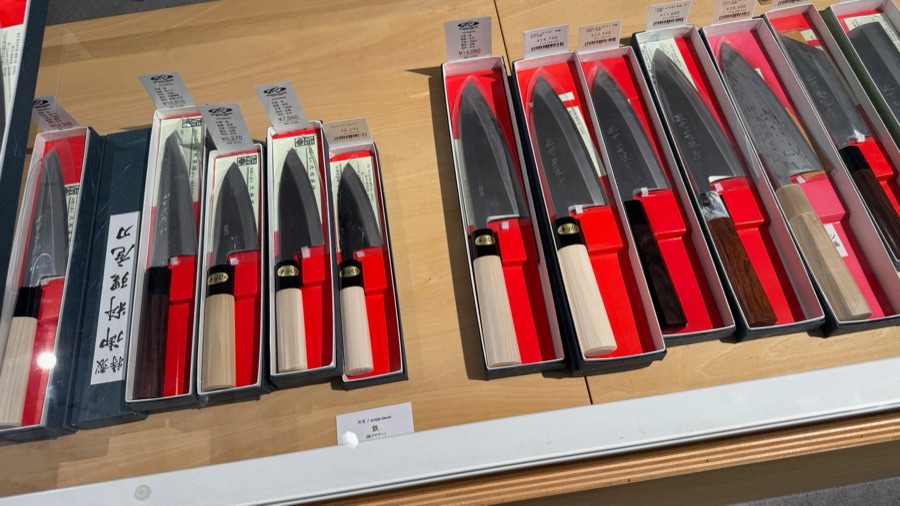
Our photo from the Takefu Knife Village shop, not the item sold online
Hocho Knife
The shop carries knives by Echizen makers including Yu Kurosaki, Takeshi Saji and Yoshimi Kato.
See the knife brands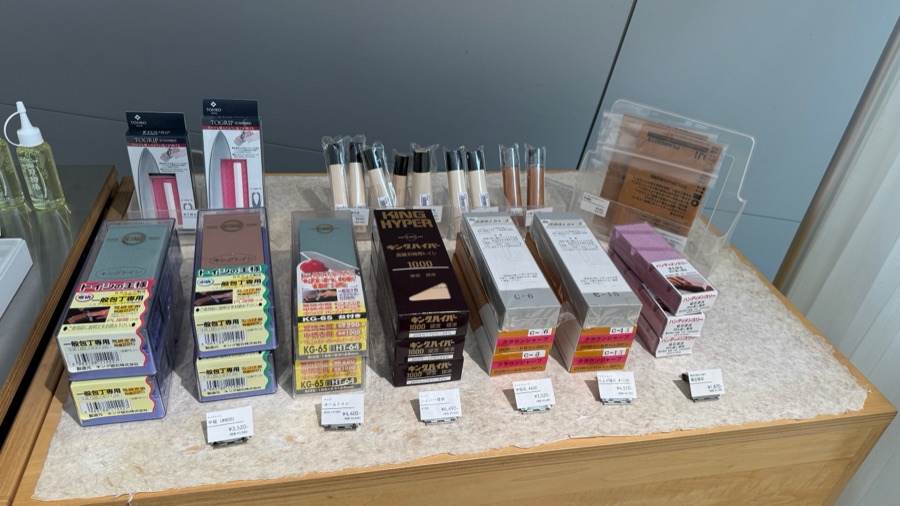
Our photo from the Takefu Knife Village shop, not the item sold online