Murasaki Shikibu Museum of Echizen: Where the Author of The Tale of Genji Lived Away from the Capital
Short answer: Murasaki Yukari no Yakata (紫ゆかりの館), the Murasaki Shikibu Museum of Echizen, is a free museum in Echizen City, Fukui, about the time the author of The Tale of Genji spent here. It is closed on Mondays. If you want to pair it with Takefu Knife Village, where weekdays are the time to see craftsmen at work, aim for Tuesday to Friday.
About this article: We have not visited this museum. Everything below comes from the museum’s own brochure, which we picked up in Echizen City on 1 November 2026, and from its official website (murasakiyukari.com, checked the same day). We have organized that information for visitors and have not added history beyond what those sources say.
Why Echizen matters to Murasaki Shikibu
The Tale of Genji has been read around the world for a thousand years. According to the museum’s brochure, its author, Murasaki Shikibu, spent a little over a year of her youth at the provincial capital of Echizen (越前国府), and Echizen is the only place in her life where she lived away from the capital.
That is why the museum’s full Japanese name is “Murasaki Shikibu and Provincial Capital Museum” (紫式部と国府資料館). The exhibits follow her journeys between the capital and Echizen and the days she spent here, in a space designed to evoke the refined world of the Heian aristocracy described in the tale.
What’s inside: five rooms
The brochure’s floor plan numbers the rooms 1 to 5.
- Garden of Encounters (出逢いの庭). You are greeted by plants associated with The Tale of Genji and a cherry tree, the museum’s symbol tree. The brochure presents it as the place where you first meet Murasaki Shikibu and the Echizen provincial capital.
- Hajimari no En (はじまりの縁). An en is the veranda-like strip that joins the inside of a building to the outside. The brochure notes that in the Heian period it was where romances began. Here it doubles as a rest area where you can enjoy the garden and the artwork. Its veranda side is also the only place in the museum where eating and drinking are allowed.
- Murasaki Shikibu Room (紫式部の間). The main exhibition, a display and hands-on space that recalls her young years in Echizen. Graphics styled after kichō (fabric screens) and picture-scroll-style video trace how she felt during that time. The brochure also shows a touchscreen titled “Which princess type are you?”
- Event Room (催しの間). Special exhibitions and limited-time events connected with Murasaki Shikibu and the provincial capital, so the contents change.
- Shirube Room (しるべの間). Tourist information for Murasaki Shikibu Park, Echizen City and the wider Tannan area, an introduction to Echizen’s traditional industries, and a shop.
The floor plan also shows two information points and men’s, women’s and multipurpose restrooms.
Murasaki Shikibu Park next door
The museum stands beside Murasaki Shikibu Park. The brochure describes the park as a Heian-period garden recreated on a large site, and calls it the only shinden-zukuri style garden in Japan. It has a pond, an artificial hill and a tsuridono (a pavilion at the water’s edge), with Mount Hino as borrowed scenery. The park map in the brochure also marks a statue of Murasaki Shikibu. The brochure does not give separate hours for the park.
Visitor information
- Hours: 9:00–17:00.
- Closed: Mondays (the next weekday if Monday is a national or substitute holiday) and over the New Year, 29 December to 3 January.
- Admission: free.
- Parking: the official site lists the south lot and the east lot (on the east side of Murasaki Shikibu Park) for cars. The north lot closed on 31 May 2026. Buses use the south lot, which has 2 spaces, first come, first served. All the lots are shared with the park, and the arrangement may change when it is busy (official site, checked 1 Nov 2026). The brochure says parking is free.
- Address: 〒915-0847 福井県越前市東千福町21-12
- Phone: 0778-43-5013
House rules (from the brochure):
- No eating or drinking except in the rest corner on the veranda side of Hajimari no En
- No smoking anywhere on the grounds
- No umbrellas inside the building
- No animals except assistance dogs
- No flash photography, and no tripods or selfie sticks
- Please don’t make phone calls in the exhibition rooms
Getting there
Echizen-Takefu Station (Hokuriku Shinkansen) and Takefu Station (Hapi-Line Fukui) are two different stations, so check which one your route uses.
- From Echizen-Takefu Station: about 15 minutes by car.
- From Takefu Station: about 30 minutes on foot. By bus, take the Fukutetsu bus bound for Hakusan and get off at Murasaki Shikibu Kōen-guchi, or take the city bus “Norossa” on the central loop South Route and get off at Murasaki Shikibu Kōen. The official website says the city bus ride takes about 20 minutes and that it runs Monday to Saturday only, not on Sundays or from 31 December to 3 January.
- From Shikibu Station (Hapi-Line Fukui): the official website lists this station as about 20 minutes on foot.
- By car: about 15 minutes (about 7 km) from Takefu IC on the Hokuriku Expressway.
Combining it with Takefu Knife Village
According to brochures we picked up locally, the knife village is about 10 minutes by car from Echizen-Takefu Station (Echizen Chiyozuru-no-Yakata brochure) and the museum about 15 minutes (the museum’s brochure). Neither source gives the travel time between the two, so we won’t guess. Check a map app or ask your driver.
A few things shape the plan:
- Day of the week. The museum is closed on Mondays. At the knife village, fewer craftsmen work on weekends, and its closing days follow a calendar on its official site. Tuesday to Friday suits both. On a Sunday the museum is open, but the city bus to it does not run.
- Hours. Both are open 9:00–17:00, so you have the same window at each.
- Taxis. Taxis don’t always wait at Echizen-Takefu Station, so book ahead. Our Takefu Knife Village guide explains the station layout, the booked-taxi stand and what to see at the village.
- Getting around. The museum can also be reached by Hapi-Line and bus, but to link it with the knife village in one day, a taxi or car is the simplest option.
- A third stop. The Echizen Washi Village, a papermaking district, is also about 10 minutes by car from Echizen-Takefu Station. It is covered in the same knife village guide.
Once you are at the museum, the Shirube Room has tourist information for the area, which is useful if you are deciding what to see next.
Summary
If The Tale of Genji means something to you, this is the place to see how Echizen fits into its author’s life, and it costs nothing to enter. With five rooms, it fits easily into a day that also includes Murasaki Shikibu Park next door and the knife or paper villages nearby.
If you’d like an Echizen knife of your own, you can also order one online.
Buying Echizen knives online (Hocho Knife)
Hocho Knife is a Japanese knife shop that ships internationally. We have not used these products ourselves, so we don't rate them. Check prices, stock and shipping on the shop's pages.
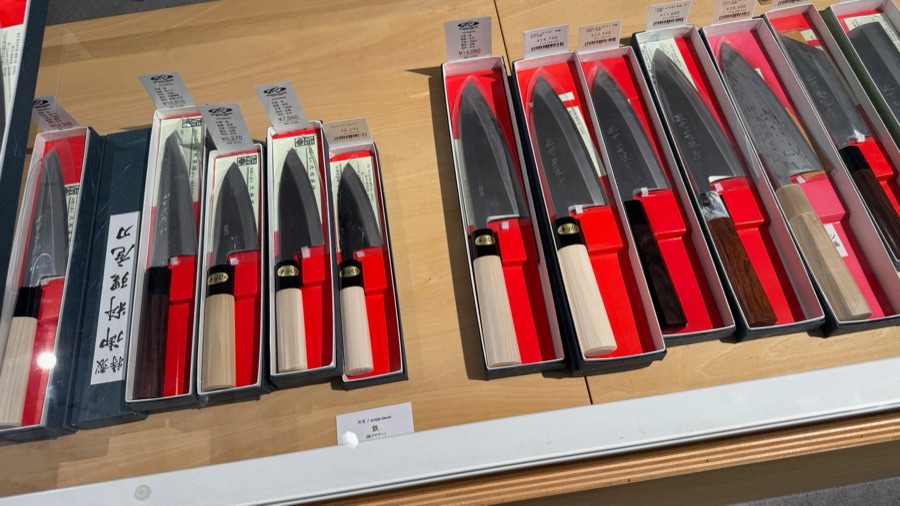
Our photo from the Takefu Knife Village shop, not the item sold online
Hocho Knife
The shop carries knives by Echizen makers including Yu Kurosaki, Takeshi Saji and Yoshimi Kato.
See the knife brands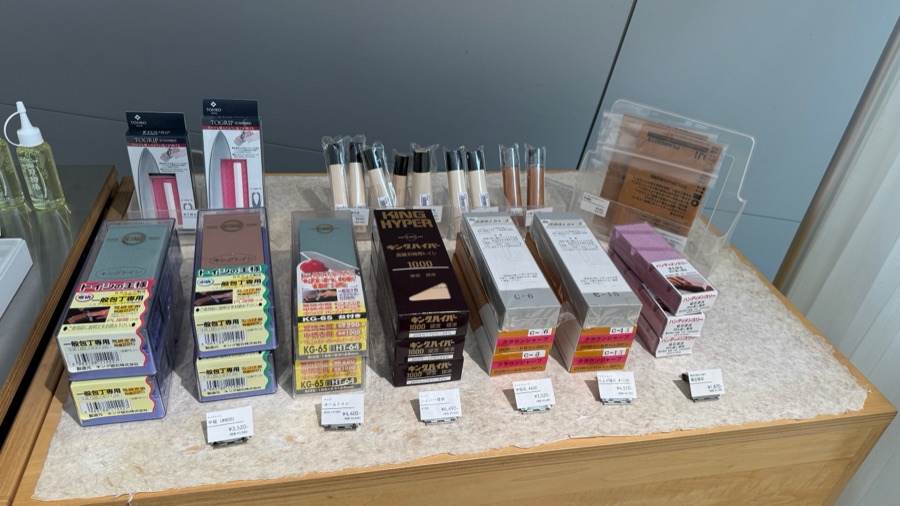
Our photo from the Takefu Knife Village shop, not the item sold online